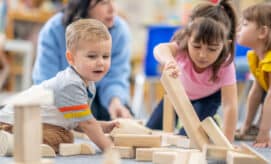


The Reggio Emilia curriculum is a popular teaching style that is implemented in many early learning programs. The approach, which originated in Italy, emphasizes child-directed, open-ended experiences in a thoughtfully curated learning environment. In this article, we provide a brief overview of the Reggio Emilia curriculum: where it came from, what it looks like, and how you might incorporate it into your classroom. Even if your program does not currently use Reggio principles in its curriculum, some of the information might inspire new ideas to try with the children in your care.
The Reggio Emilia approach originated in 1945 in a town called Villa Cella, which is located just outside the town of Reggio Emilia. In collaboration with the local community, a psychologist named Loris Malaguzzi started a network of schools for infants and toddlers that emphasized children’s natural capacity for learning.
Today the Reggio Emilio approach retains many of its original values, including an underlying belief in the ability of children to take ownership of their growth processes. The North American Reggio Alliance lists additional central values, such as:
An intentional, well-designed, and ever-changing learning environment is a critical element of the Reggio philosophy. Classrooms are designed to help children feel at home, safe, and represented, because when children feel a sense of belonging, they are inspired to learn.
A typical Reggio Emilia learning environment includes “three teachers:” the child, the teacher, and the classroom. In an article for NAEYC, Mary Ann Biermeier, MEd, director of professional development at Pinnacle Presbyterian Preschool, explains:
“The first teacher—the parent—takes on the role of active partner and guide in the education of the child. The second is the classroom teacher. Often working in pairs, the classroom teacher assumes the role of researcher and intentionally engages children in meaningful work and conversation. The third teacher is the environment—a setting designed to be not only functional but also beautiful and reflective of the child’s learning. It is the child’s relationship with parent, teacher, and environment that ignites learning.”
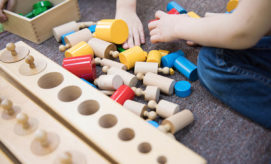
This emphasis on environment means that the set-up of the classroom is especially important, with attention paid to encouraging engagement and exploration. Reggio classrooms often utilize natural materials, such as leaves, rocks, sticks, and pinecones, as well as found or recycled items, such as corks, empty boxes, and pieces of cardboard. These materials are open-ended, inspiring creativity, problem-solving, and self-directed learning experiences.
A key component of a Reggio classroom is documentation, which refers to displays of young children’s projects, artwork, and play. When children’s work is displayed, it helps make the learning process visible, encouraging educators, parents, and children to reflect and see where growth has occurred. To learn more about documentation, you might enjoy this G2K article from the archives: The Power of Documentation During COVID-19 and Beyond, which takes a deeper look at what documentation looks like and how it can inspire connection.
Even if you are not working in a Reggio program, you can still incorporate some of the values and principles into your work with young children. Here are a few ideas…

Critical Thinking Skills & Their Importance in Early Learning