


A positive relationship with nutritious food encourages young children to engage in healthy eating habits that support their ongoing learning, growth, and development. As early learning professionals, we can most effectively support children’s healthy food choices in partnership with their families and parents. This article describes the impact of wholesome foods on children’s physical and cognitive development, and offers practical strategies to share with parents so they can encourage their child’s healthy eating habits.
Nutrition plays an important role in young children’s growth and development. During early childhood, the foods that children eat impact, not just their physical health, but also their ability to focus, learn, build friendships, and more.
An article written for agencies distributing the federal grant program, Supplemental Nutrition for Women, Infants, & Children (WIC), points to the preventative benefits of early nutrition: “Proper nutrition during the first five years of life is crucial for a child’s growth, brain development, and overall health. This is a period of rapid physical and cognitive development, making it essential to provide children with the right nutrients to set the foundation for a healthy future. Poor nutrition in early childhood can lead to serious health problems, including stunted growth, weakened immune systems, and learning difficulties.”
Research indicates that the quality of a child’s early diet may also be a predictor for later academic success. One research study found that more frequent consumption of fruits, vegetables, and healthy dairy at ages one, two, and three, contributed to higher scores in mathematics, reading, writing, and spelling during elementary and middle school.
Understanding nutrition guidelines can help early care & learning providers to support the healthy physical and cognitive development of infants, toddlers, and young children. While many families provide the food that their children eat during the time they are in our care, we can support families by understanding and sharing information about healthy food recommendations for young children. For early learning programs that provide snacks and meals, knowledge about nutritional recommendations can help us make informed choices about the types of foods we offer to little ones.
Healthy Children, a website from the American Academy of Pediatrics, shares information about a variety of aspects of wellness for children by age group. Below are their nutrition recommendations for infants, toddlers, and preschoolers:
Early learning educators and care providers have a unique opportunity to promote healthy eating habits in their classrooms and programs. Through daily routines and interactions with little ones, ECE professionals can help children develop a positive relationship with food in an engaging and meaningful way.
Children learn so much from watching the adults in their lives! Educators can play an important role by modeling healthy habits for young children. At snack time, you might sit down with children and encourage them to eat some fruits and vegetables alongside you. You can also talk with them about the kinds of healthy foods you enjoy eating, and ask them about their favorite foods. When children see their caregivers curious and excited about eating healthy foods, it can help inspire them to join in!
For young children, mealtimes are an opportunity to try new things and to experience being part of a community. Make mealtime enjoyable by encouraging children to connect with their peers and talk with each other about the different kinds of foods they are trying.
You can introduce enjoyable activities into mealtime routines, such as playing music in the background while children eat, or bringing snacks outside to enjoy on a blanket for a picnic! Making lunch and snack time exciting and enjoyable helps children develop a positive relationship with mealtime, supported by happy memories around food and eating.
When children are involved in activities related to food and mealtime preparation, they are more likely to be interested in eating the food they are served during mealtimes.
When it comes to food and nutrition, early care & learning providers can be most effective when they work in partnership with families. Educators who learn from families about their child’s food preferences at home and their family’s mealtime routines, are in a better position to incorporate favorite foods and familiar routines into their classroom mealtime planning. Partnerships are particularly beneficial when they flow both ways, with educators sharing ideas and resources and families offering insight into cultural food traditions and family practices around food. Consistency and cooperation between home and school is a great way to reinforce healthy habits.
To help you build connections with families around healthy eating and nutrition, you might enjoy the following resources:

Kid-Friendly Recipes for November: Cooking with Seasonal Produce 
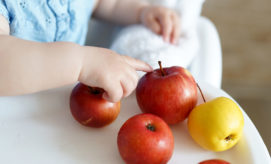
Enjoying Apple Season: Activities & Books for Young Children

Seasonal Lesson Plan for Preschoolers With Local Produce