
In early learning classrooms, art centers are important spaces for inspiring children’s sense of imagination and self-expression. Providing a variety of intentionally selected materials sparks creativity while encouraging learning and development. In this article, we explore materials to include in an early learning art center and share a few tips for creating an engaging and inspiring space for young children.
Intentionally selecting art materials that are interesting, engaging, and versatile helps to create an environment in which children are invited to experiment, explore, and be creative. Below are ideas and examples to help you get started.
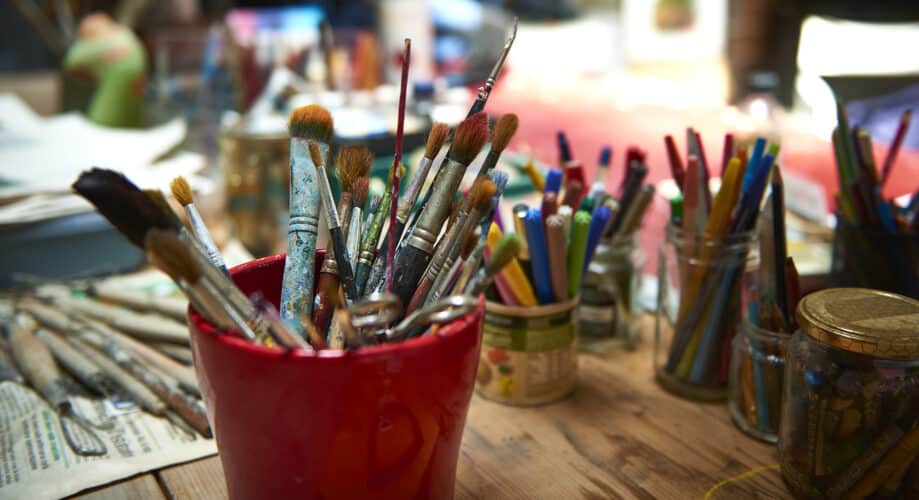
Materials that can be used in a variety of art projects and activities tend to be staples in most early learning art centers. These items encourage creativity while also supporting fine motor skill development, as little ones draw, write, cut, and paint – all of which require the use of small muscles in the hands and fingers. Basic art materials you might consider for your art center include…
The natural world is filled with materials that young children can use in art and creative projects. As little ones engage with these items, they can explore the various colors and textures of nature, while also learning foundational scientific concepts. Examples of natural materials to incorporate into your art center include…
Recycled items spark children’s sense of creativity by encouraging them to see everyday objects in new ways. As children engage in this creative process, they practice problem-solving and flexible thinking, both of which will support later academic success. Some recycled items that can be used in early learning art projects include…
Materials with distinctive textures are ideal for sensory art activities. Squishing, squeezing, and sticking a variety of materials together engages children in creative projects while exercising their little hands and fingers and strengthening fine motor skills. You might consider equipping your art center with sensory art materials such as…
While stocking your classroom’s art center might seem expensive, there are many cost-effective ways to collect art supplies. Local thrift stores and Dollar Stores are great places to find inexpensive items. You might check out online marketplaces, such as Facebook and Nextdoor, to see if items might be available in the free sections or in “buy nothing” groups. Let families and friends know what art materials you’d like to add to your art center by posting a donation wish list on your website or by displaying a list near the entrance of your classroom.
The way that materials are displayed in art centers can have a significant impact on the choices children make about using and interacting with the available items. Organizing the art center thoughtfully helps children easily access materials when they are feeling inspired.