
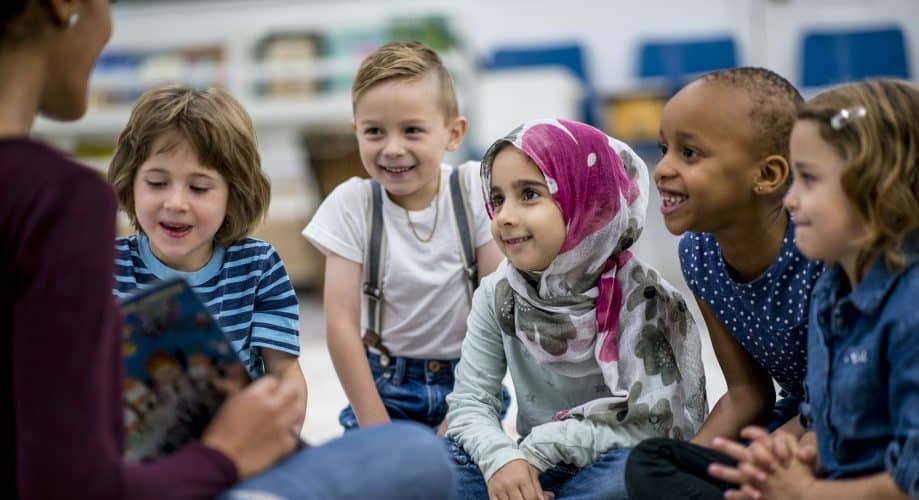
As educators and caregivers, we strive to create inclusive classroom communities that represent and support the needs of all students. We welcome all families and invite opportunities to learn from each other about the cultural perspectives of our community members.
However, while we may have the best of intentions, the truth is that everyone has biases. Teachers often hold themselves to a high standard of equality, empathy, and education, but they are also human, and prone to some of the same biases present in many other adults with similar backgrounds.
Researchers from Princeton and Tufts University, who conducted research on the teacher biases, define implicit bias as “the automatic cognitive associations or affective predispositions individuals have with different social groups,” noting that people often have little awareness and control over these biases. They note that implicit bias is different from explicit bias, which refers to “attitudes or affective reactions that people are aware that they have.”
The study found that teachers’ bias levels are similar to those of the larger population, challenging a common misconception that teachers are uniquely able to be “colorblind” or less biased than other adults. This means that educators must be intentional about gaining a better understanding of their own biases to become more self-aware and recognize opportunities for improvement. Toward that end, below is a list of resources to help educators examine and understand their personal biases.
Project Implicit: A series of tests from Harvard University that can be used to better understand your own biases
The Brilliance of Black Boys: A short book, and an important read to help educators learn about biases and racism in the classroom. The book explores inaccurate and unjust perceptions of Black boys, while presenting strengths-based strategies to make a change. The authors encourage educators to practice self-reflection to become aware of their biases. The research and personal stories included in this book will remind readers of the promise and potential of Black boys.
Bias Starts as Early as Preschool, but Can Be Unlearned: An article from Edutopia that looks at how children form biases that gives recommendations for ways that teachers can respond to create a more equitable classroom environment.
Embracing Anti-Bias Classrooms – A Response to Racism in America: A free, previously recorded webinar that looks at implicit bias, microaggression, and white privilege. The webinar focuses on best practices for creating culturally-rich and supportive classroom environments.
Implicit Biases in Early Childhood Settings: Dr. Walter Gilliam from the Edward Zigler Center in Child Development and Social Policy at Yale shares his research on implicit bias and the implications on both policy and practice in early childhood and early learning settings. He shares how implicit biases affect almost everything we do, even our work as early childhood professionals.