
During their preschool years, children learn, grow, and gain new skills every day. Educators who care for children at this stage play an important role by creating play-based learning experiences that support skill development across a variety of domains—from cognitive and physical development to language and social-emotional learning. In this article, we offer preschool educators tips for planning a well-rounded curriculum with a range of engaging experiences that will support the key components of preschooler learning and skill development.
Imaginative and creative play encourages children to think flexibly, problem-solve, and explore new ideas. Art, music, and pretend play offer children the opportunity to express their ideas as they build critical skills in executive functioning, attention and focus, perspective-taking, and more. An article from Michigan State University explains, “Art can help children learn and practice skills like patterning and cause and effect…They can also practice critical thinking skills by making a mental plan or picture of what they intend to create and following through on their plan.”
Below are examples of the types of creative and imaginative play activities that support children’s cognitive development, as well as links to specific ideas to try in each category.
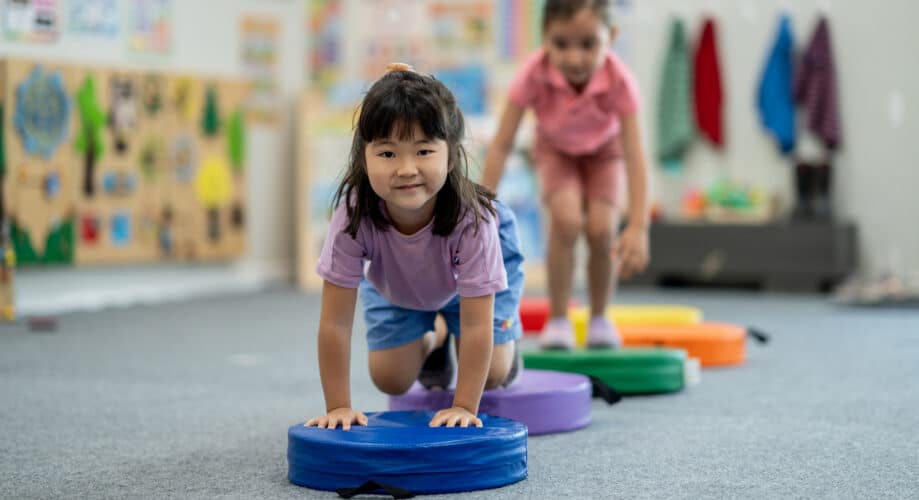
Preschoolers are on the move! As their coordination, strength, and confidence continue to develop, they are drawn to active games and activities. An article from the pediatric practice, CommonWealth Pediatrics, notes, “Active play, which includes running, jumping, climbing, and other forms of physical activity, helps children develop strong muscles and bones. It enhances motor skills, both gross and fine, and improves coordination and balance. Activities like playing tag, riding bikes, or participating in sports are all excellent ways for children to build their physical strength and endurance.”
Educators can support children’s development by setting up opportunities for active play throughout the day, such as:
Preschoolers enjoy opportunities to take on responsibility and demonstrate independence. In a preschool classroom, this might look like taking on a role during daily routines and activities, or being invited to help with classroom maintenance tasks. These simple activities support developing leadership skills, self-confidence, independence, and autonomy, while also encouraging a sense of shared community in your early learning space.
Preschoolers are still developing the skills to manage and express their big feelings. Educators can support their emotional development by helping them to recognize, understand, and express their internal experience.
An article from Penn State’s early childhood program explains, “The process of calming down when upset and using words to describe feelings and address challenges requires a lot of practice…Helping children to identify and label emotions is an important first step…Adults support children’s social-emotional development when they label and talk about emotions.”
We can facilitate these conversations with some simple strategies.
During the preschool years, children’s developing social-emotional skills encourage them to seek out opportunities to play and engage with their peers. Group play becomes more meaningful and collaborative, and children learn how to navigate friendships. As they engage with others, little ones develop their ability to empathize and to use communication skills in situations requiring negotiation, conflict resolution, and problem-solving.
Educators can support children’s developing social and communication skills by offering group activities that encourage meaningful social interactions, such as:
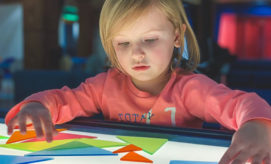
Young children explore science, technology, engineering, and math (STEM) concepts through open-ended play. Open-ended play refers to activities and experiences in which children can freely explore, create, and experiment, using their imagination to guide the experience. In open-ended play, there is no intended outcome or goal, and the focus is on investigation and fun! In a preschool classroom, open-ended activities might include building with legos, playing in a water sensory bin, or using magnifying glasses to explore the environment. All of these develop important STEM skills, such as problem-solving, cause and effect, experimentation, measurement, comparison, and more!
Early childhood educators can incorporate STEM-rich open-ended play by…
How to Use Everyday Items in ECE Classrooms for Creativity and Learning 

Celebrating Birthdays in an Early Learning Environment