

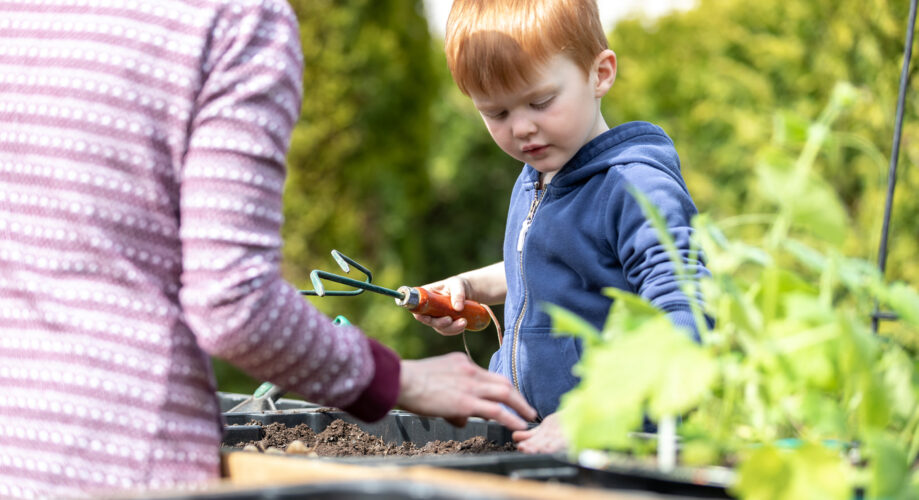
Young children love observing and exploring the natural world! Plant and garden-themed activities can give little ones a chance to care for plants and help them grow, while discovering the way sun, rain, and soil help seeds and roots develop into fruits, vegetables, and flowers.
In this article, we share ideas for including plants and gardening as part of your early learning curriculum… during every season and in any size space.
You can make a garden anywhere! You might get started with a few plants grown in pots placed outside, or if you are short on space, you can put some very small plants on window sills and in other spots around your classroom.
Using plants that typically thrive indoors, such as succulents, aloe vera, or snake plants, is a great place to start. You might also visit a local nursery for some guidance about the types of plants that will do best in the space that you have available.
Once you are ready to plant, invite the children to help pour the soil into the pots and place the plants in the soil. Talk with the children about making a plan to keep the plants healthy by watering them regularly.
As children help care for the plants, you might invite conversations about the unique preferences each plant has for sunlight, shade, and water. Invite children to use magnifying glasses to look closely at the plants as they grow, or even draw pictures to track the plant’s progress.
If you have access to outdoor space (even if there is room for just a few pots), you can make your own small garden to enjoy with the little ones in your care. Many fruits and vegetables can grow and thrive in small spaces with minimal maintenance. Cherry tomatoes, strawberries, herbs, and leafy greens like swiss chard, are examples of easy-to-grow options that can thrive either in pots or in the ground, depending on your outdoor space.
A few helpful tips for getting started…
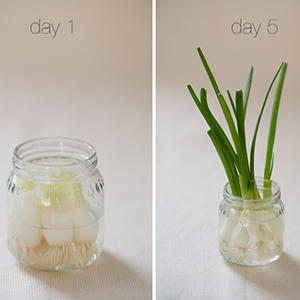
Did you know that some commonly used produce can be easily re-grown from their old scraps? When produce such as green onions and celery are placed in jars, they sprout new life! This activity is not only budget-friendly but also provides an exciting introduction to plant life cycles for young children. It’s a great way to introduce gardening to your classroom if your outdoor space is limited.
All you need to get started are a few clear jars, some water, and a sunny windowsill or table. Children will enjoy watching the transformation as new roots and shoots appear, often within just a few days. You can find specific “how-to” jar cultivation details below, for both green onions and celery.
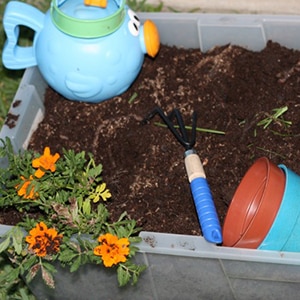
Another way to incorporate gardening into your classroom if you are short on space is to make a garden-themed sensory bin. This can be a great way for little ones to explore the textures, colors, and smells of a garden, and it doesn’t require a lot of set-up time.
Fill a large plastic tub with fresh dirt and flowers (preferably with their roots still attached) so children can “plant” the flowers in the dirt. You might add in some pretend or actual produce like carrots and potatoes so that children can learn about how their food is grown, and can have fun digging up their fruits and vegetables.
This bin can be easily customized in a variety of ways. For example, if you do not want to use soil, you can swap in black beans or shredded brown paper bags. You can also add a small watering can to invite children to water their plants, and add shovels, flower pots, and more. This fun, hands-on activity supports fine motor skill development, and invites children to learn about and experience the joy of working with plants!
Sharing picture books about plants and plant growth cycles is a wonderful way to introduce gardening concepts to the children in your care or to enrich the experience of caring for plants in your classroom. There are many engaging stories with a gardening-theme, such as…
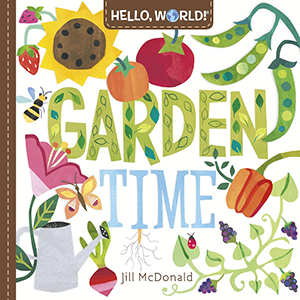
This story, by Jill McDonald, is a board book that teaches young children about gardens, how plants grow, and how gardening puts food on our tables. Find a free read-aloud of this story on Youtube.
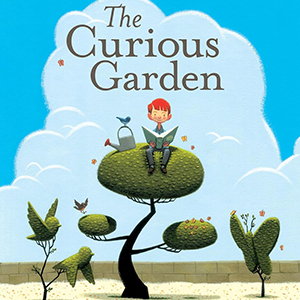
This popular picture book, written by Peter Brown, tells the story of a boy who discovers a struggling garden and decides to take care of it. Find a free read-aloud of this story on Youtube.
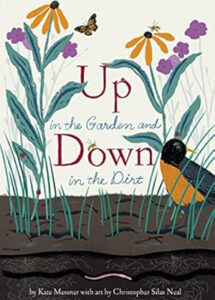
This children’s book, written by Kate Messner and illustrated by Christopher Silas Neal, explores what is happening underneath the dirt as a young girl and her grandmother spend a year planning, planting, and harvesting their garden. Find a free read-aloud of this story on Youtube.


